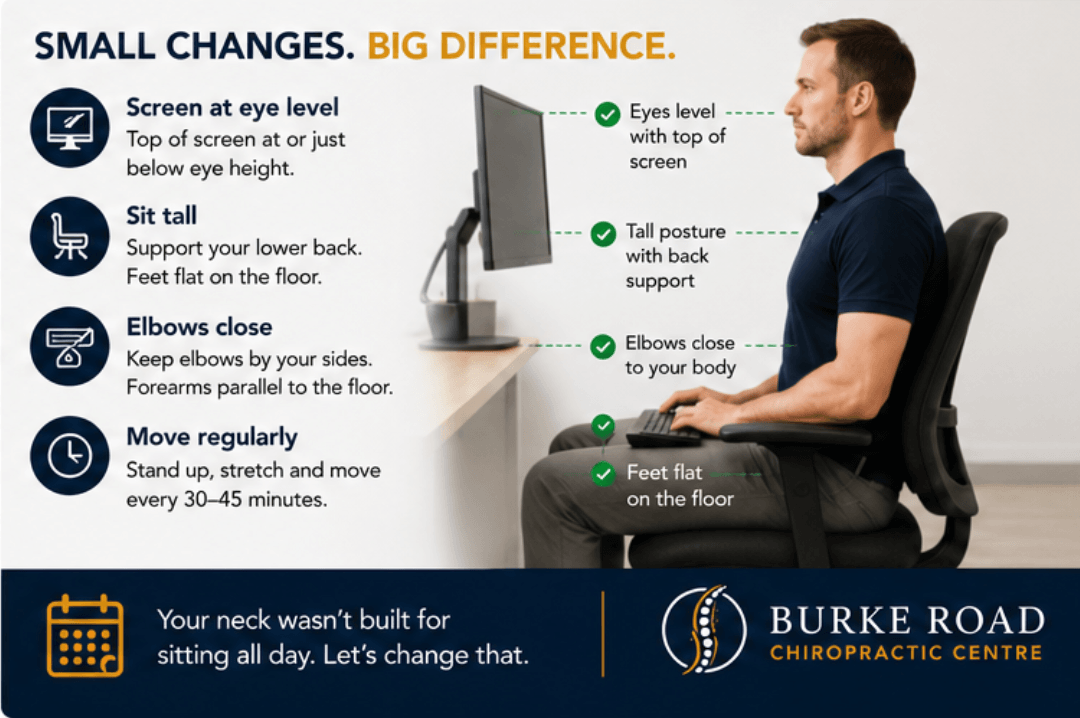
Let me paint you a picture. You’re sitting at your desk, head forward, shoulders rounded, eyes fixed on a screen about 60 centimetres in front of your face. You’ve been in this position since 9am, it’s now 3pm, and the only movement you’ve made is reaching for your coffee.
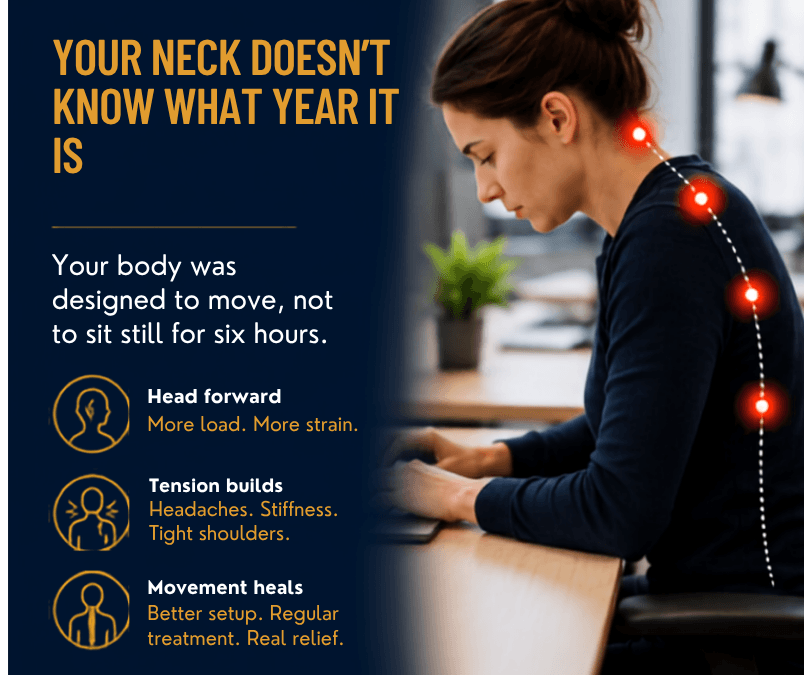
Your neck doesn’t know it’s the 21st century. It was designed for a body that was walking, climbing, carrying and generally moving around all day. What it wasn’t designed for is six hours of forward head posture.
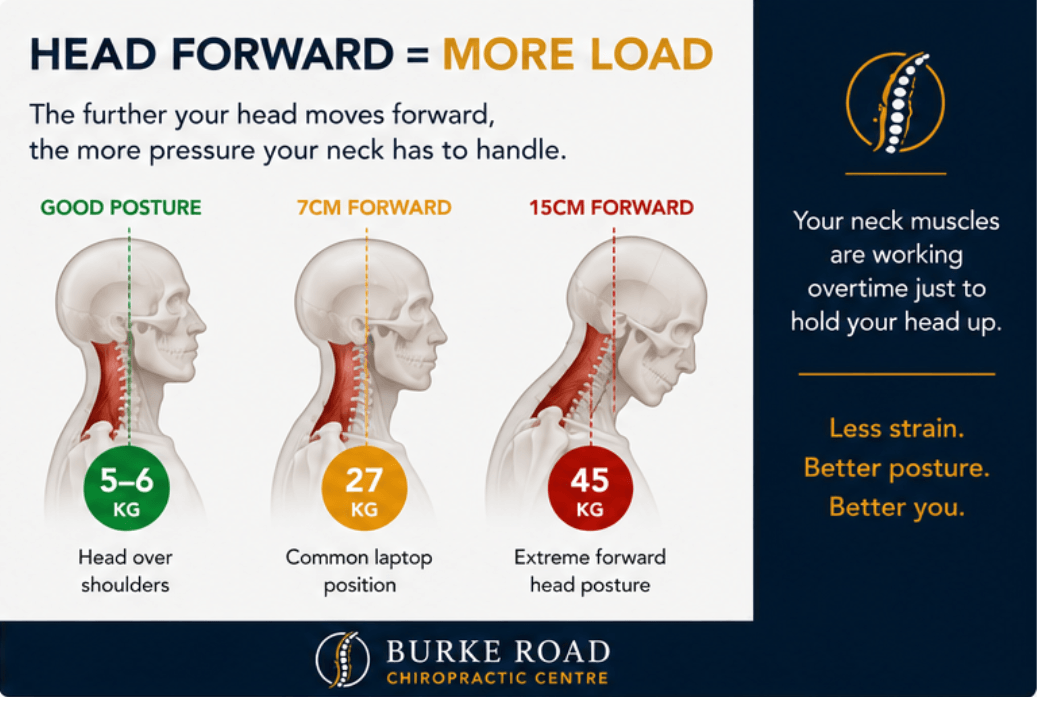
For every centimetre your head moves forward from its natural position over your spine, the effective load on your neck increases. A head sitting directly over the shoulders weighs around 5–6kg. Tilt it forward 7cm — which is pretty normal for someone on a laptop — and that load can increase to 27kg. Your neck muscles are doing a lot of work just to stop your head falling into your keyboard.
The result? Tension headaches, stiffness, tight upper traps, and that familiar ache between the shoulder blades that you’ve just accepted as a normal part of your working week.
It doesn’t have to be normal.
A few simple adjustments to your workstation setup, combined with regular treatment to release the accumulated tension, can make a significant difference. I work with a lot of people in desk-based jobs. It’s one of the most common things I treat.
If your neck has been telling you something for a while, it might be time to listen.